
5G’s role in saving lives is not about its famous speed, but its unique capacity for guaranteed, mission-critical reliability that consumer-grade networks cannot provide during a crisis.
- Standard data plans are designed to fail under pressure, as they are the first to be deprioritized during network congestion—precisely when emergencies occur.
- Advanced features like network slicing create a private, inviolable lane for medical data, ensuring it gets absolute priority over all other traffic.
- The true measure of performance for telemedicine is not a local speed test but the end-to-end latency and stability between the patient and the remote specialist.
Recommendation: To ensure patient safety, healthcare providers must focus on implementing enterprise-grade 5G with specific safeguards like network slicing, dedicated gateways, and robust backup systems.
In the critical moments of a medical emergency, every second is a battle against irreversible damage. Imagine a paramedic in a rural ambulance, miles from the nearest stroke center, trying to transmit a patient’s vital signs to a neurologist. Or a surgeon in a city hospital, controlling a robotic arm performing a delicate procedure on a patient in a remote clinic. In these scenarios, the promise of telemedicine hinges on one non-negotiable factor: the absolute, unwavering reliability of the communication network. While the conversation around 5G often centers on its staggering speed, this focus misses the most crucial point for emergency healthcare.
The common approach is to assume any fast connection will suffice. However, this overlooks the fundamental architectural differences between consumer-grade networks and mission-critical infrastructure. A standard mobile network operates on a “best-effort” basis, which is sufficient for streaming video but catastrophic when a life is on the line. The true value of 5G in emergency medicine lies not in its speed for downloading movies, but in its underlying ability to provide guaranteed, prioritized, and ultra-reliable connectivity, even in the midst of a city-wide crisis that cripples lesser networks.
But if the key isn’t just raw speed, what is it? The answer lies in a strategic deployment of specific 5G capabilities designed for industrial and emergency applications. This is a paradigm shift from viewing connectivity as a utility to engineering it as a life-support system. It’s about understanding the catastrophic risk of a 10ms delay in telesurgery and knowing how to architect a network that prevents it.
This article will deconstruct the specific technologies and protocols that transform 5G from a consumer convenience into a life-saving tool for healthcare providers and emergency responders. We will explore how to properly equip an ambulance for real-time data transmission, leverage network slicing to guarantee data priority, identify the critical mistake of using standard data plans, and choose the right backup systems for ultimate resilience. This is the blueprint for building a telemedicine infrastructure that doesn’t just work—it works when it absolutely has to.
To navigate this critical subject, we have structured this guide to address the most pressing operational and technical questions. The following sections provide a clear roadmap for understanding and implementing a truly reliable emergency telemedicine system.
Summary: How 5G Low Latency Saves Lives in Emergency Telemedicine Scenarios?
- Why a 10ms Delay Is Too Risky for Remote Surgical Procedures?
- How to Equip an Ambulance with 5G to Transmit Vitals in Real-Time?
- Network Slicing: How to Guarantee Medical Data Priority During a Public Crisis?
- The Mistake of Using Standard Data Plans for Critical Medical IoT Devices
- Satellite or Fiber: Which Backup System Is Best for Rural Telehealth Clinics?
- How to Run a “Pre-Flight” Tech Check 15 Minutes Before Your Appointment?
- 4G or 5G: Do You Really Need Gigabit Speeds for Social Media Scrolling?
- How to Set Up a Telemedicine Station for Seniors with Limited Tech Skills?
Why a 10ms Delay Is Too Risky for Remote Surgical Procedures?
In the context of remote surgery, latency isn’t just a measure of speed; it’s a measure of safety. A delay, or latency, is the time it takes for a signal to travel from its source to its destination and back. For a surgeon operating a robotic system, this “round-trip” time is critical. The surgeon relies on real-time haptic feedback—the sense of touch and resistance—to feel the tissue they are manipulating. Even a minuscule delay between the surgeon’s hand movement and the robot’s response can break this crucial feedback loop, leading to disastrous consequences.
Imagine a surgeon making a precise incision. They feel the resistance of the tissue, and their brain instantly adjusts the pressure. If there’s a delay, the visual information on their screen will not match the physical sensation their hand expects. This sensory mismatch can cause them to apply too much force, perforating an organ, or not enough, resulting in an incomplete cut. The risk of error increases exponentially as latency grows. This is not a theoretical problem; haptic feedback desynchronization is a known and significant danger in telesurgery.
This is why the industry has established strict performance thresholds. For complex procedures, telesurgery experts assert latency must fall below 100 milliseconds to maintain surgical accuracy and safety. While 10ms is an ideal target, anything significantly higher introduces unacceptable risk. A 4G network, with its variable latency that can easily spike above 50-100ms under load, is simply not viable for these mission-critical applications. 5G, specifically with Ultra-Reliable Low-Latency Communication (URLLC), is engineered to consistently maintain latency in the single-digit millisecond range, providing the stability and responsiveness required to make remote surgery a safe reality.
The risk is not merely about a slow connection; it’s about the potential for catastrophic failure in the middle of a life-saving procedure. A sudden lag or packet loss could translate directly into a surgical error. Therefore, the choice of network is not a technical preference but a fundamental component of patient safety protocol.
How to Equip an Ambulance with 5G to Transmit Vitals in Real-Time?
Transforming an ambulance into a mobile telehealth hub is not as simple as plugging in a 5G modem. It requires an enterprise-grade, resilient infrastructure designed to maintain a stable, high-bandwidth connection through constantly changing environments—from dense urban canyons that block signals to remote rural roads with sparse coverage. The goal is to ensure that paramedics can transmit high-definition video and a constant stream of patient vitals to hospital specialists without interruption.
A successful deployment relies on a specific set of industrial-grade components working in concert to create a “network bubble” of guaranteed reliability inside the vehicle. This is not a place for consumer-grade hardware. The core of the system is an industrial IoT gateway, which acts as the rugged and intelligent brain of the vehicle’s connectivity.
The essential equipment configuration includes several key elements:
- Industrial 5G Gateway: Install a device like the AR7091 Industrial IoT Gateway. Its primary function is to provide robust 5G connectivity with a redundant link design. This means it can seamlessly switch between different cellular networks or carriers to maintain the most stable connection available at any given moment.
- Multi-Network Redundancy: Configure the gateway to utilize SIM cards from multiple carriers. This setup ensures a stable network inside the ambulance at all times, automatically failing over to a stronger signal when one network’s coverage weakens, guaranteeing uninterrupted data flow.
- High-Definition Video Transmission: Set up high-definition cameras connected to the gateway. The high bandwidth of 5G allows for fast, clear, and stable video streams, enabling remote specialists to visually assess the patient’s condition in real-time and guide paramedics through critical interventions.
- Quality of Service (QoS) Configuration: This is a critical software setting on the gateway. QoS must be configured to prioritize critical data streams—such as the patient’s EKG, oxygen saturation levels, and the live video feed—over any non-essential traffic. This ensures that the most important information always gets through without delay.
By implementing this type of mission-critical architecture, the ambulance becomes a true extension of the hospital emergency room. It allows for diagnoses to begin the moment a patient is onboard, dramatically shortening time-to-treatment for conditions like stroke and heart attack, where every minute saved improves survival rates.
Network Slicing: How to Guarantee Medical Data Priority During a Public Crisis?
One of the most significant, yet often misunderstood, advantages of 5G for emergency medicine is network slicing. This technology is the fundamental answer to a critical question: how do you ensure a paramedic’s data transmission gets through when the entire city is trying to use their phones during a major public event or a disaster? On a standard 4G or consumer 5G network, the answer is you can’t. All data is treated more or less equally, leading to congestion and dropped connections precisely when they are needed most.
Network slicing changes this entirely. It allows a mobile network operator to partition a single physical 5G network into multiple virtual, end-to-end networks. Each “slice” can be customized with specific characteristics, such as guaranteed bandwidth, ultra-low latency, or extreme reliability. For healthcare, this means an operator can create a dedicated, isolated “slice” exclusively for emergency medical services. This slice acts like a private, high-speed lane on a highway that is reserved only for ambulances, hospitals, and medical IoT devices.
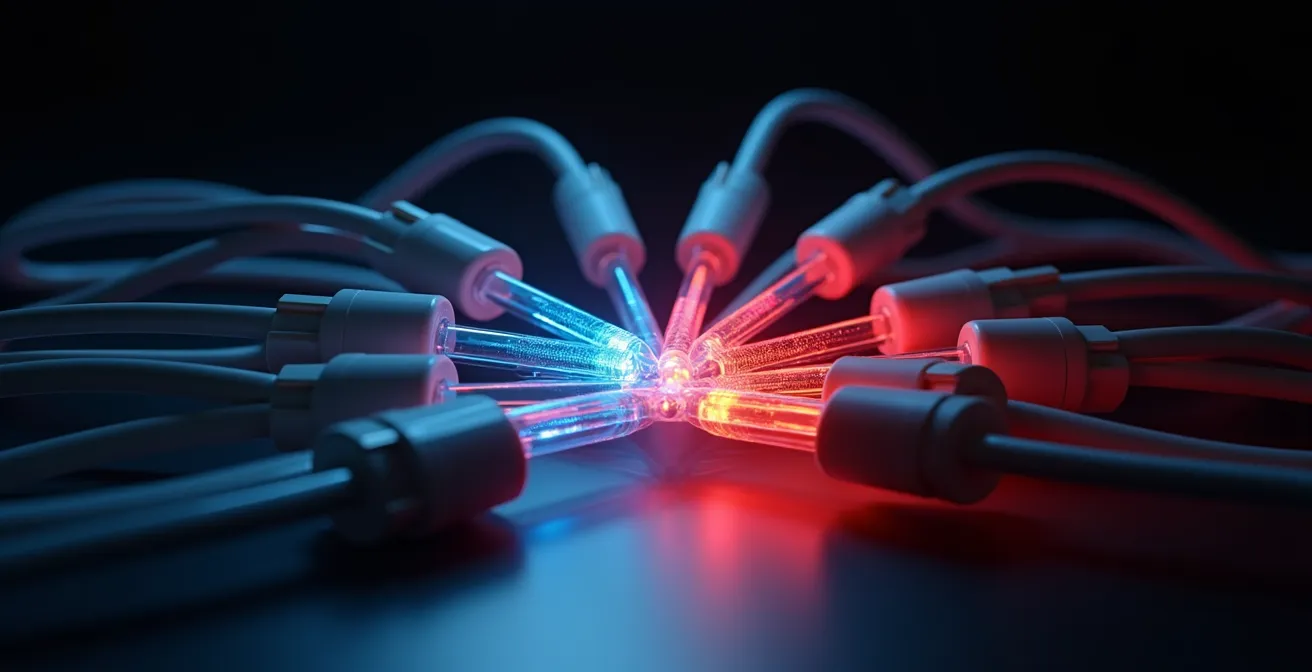
As the visualization suggests, this isn’t just a simple prioritization. It’s a complete segregation of network resources. While the general public uses the main “lanes,” which may become congested, the medical slice remains clear and performs at its peak capacity, unaffected by the traffic around it. This provides an unprecedented level of guaranteed service quality that is simply not possible with previous generations of cellular technology.
This capability is what makes 5G truly mission-critical. During a mass casualty incident, where network demand skyrockets, this private slice ensures that vital communications are protected. As Telit Communications explains in their guide, “How 5G Is Reshaping Connected Health Care”:
Non-essential traffic (e.g., streaming services) is deprioritized or limited to basic text communications. The network can quickly reallocate resources from regular users to emergency services. This ensures that important communications have security and enough bandwidth. It also provides low latency for quick and flexible responses, which can save lives.
– Telit Communications, How 5G Is Reshaping Connected Health Care: A Guide
By negotiating for a dedicated network slice with a carrier, a healthcare provider or emergency response agency can secure a level of reliability that is immune to public network congestion, ensuring that their life-saving data always has a clear path.
The Mistake of Using Standard Data Plans for Critical Medical IoT Devices
A common and dangerous misconception is that any SIM card with a data plan can power a critical medical device. From remote patient monitors to in-ambulance diagnostic equipment, using a standard consumer data plan is a significant mistake that introduces unacceptable risks in three key areas: reliability, security, and manageability. These plans are fundamentally designed for “best-effort” performance, which is the antithesis of what is required in a medical emergency.
Firstly, consumer plans offer no guaranteed reliability. During periods of high network traffic—like an emergency event—consumer connections are the first to be throttled or deprioritized to manage load. This means a patient’s vital sign monitor could stop transmitting at the exact moment a physician needs the data most. Medical-grade enterprise plans, especially when combined with network slicing, contractually guarantee bandwidth and priority access, ensuring the data gets through regardless of public network congestion.
Secondly, the security model of consumer SIMs is inadequate for healthcare. These SIMs typically use public, dynamic IP addresses, which exposes the connected medical device directly to the open internet. This makes them a prime target for cyberattacks, creating a significant HIPAA compliance risk. In contrast, enterprise IoT SIMs for medical use are configured with private, static IP addresses that operate within a secure Virtual Private Network (VPN). This architecture effectively shields the device from the public internet, creating a secure, encrypted tunnel for data transmission that meets stringent healthcare privacy and security standards.
Finally, managing a fleet of devices with consumer plans is an operational nightmare. Each SIM must be managed individually, with no centralized control or visibility. If a device is lost or compromised, it cannot be deactivated instantly. Enterprise IoT platforms provide a single dashboard to remotely monitor, manage, and secure thousands of devices simultaneously. Administrators can track data usage in real-time, diagnose connectivity issues, and instantly deactivate any SIM, providing a level of control and security that is essential for managing critical medical assets deployed in the field.
Satellite or Fiber: Which Backup System Is Best for Rural Telehealth Clinics?
For a rural telehealth clinic, the primary connection is only as good as its backup. A single point of failure is not an option when patient care depends on connectivity. While 5G Fixed Wireless Access (FWA) is an excellent primary or secondary option in areas with coverage, the ultimate resilience often comes from a hybrid approach involving terrestrial (fiber) and non-terrestrial (satellite) systems. The choice between them depends on availability, budget, and specific performance requirements, particularly latency.
Fiber optic cable is the gold standard for connectivity, offering the highest bandwidth and the lowest latency possible. If a rural clinic can get access to a fiber line, it should be the primary connection without question. Its reliability is exceptionally high, and its performance is unmatched. However, its major drawback is availability; fiber infrastructure is expensive to lay and is often absent in remote or sparsely populated regions.
This is where satellite technology becomes a critical enabler. Historically, satellite internet was plagued by extremely high latency (over 600ms) due to the distance signals had to travel to geostationary (GEO) satellites. This made it unsuitable for real-time applications like video consultations. However, the emergence of Low Earth Orbit (LEO) satellite constellations has dramatically changed the landscape. LEO satellites orbit much closer to Earth, reducing latency to a range of 20-40ms—low enough for effective HD video calls and other real-time telehealth services.
The following table, based on data from analyses on telemedicine connectivity options, provides a clear comparison:
| Technology | Latency | Bandwidth | Reliability | Cost | Best Use Case |
|---|---|---|---|---|---|
| Fiber Optic | <10ms | 1-10 Gbps | 99.99% | High initial, low ongoing | Primary connection where available |
| 5G FWA | 10-30ms | 100Mbps-1Gbps | 99.9% | Moderate | Primary or backup in 5G coverage areas |
| LEO Satellite | 20-40ms | 50-150Mbps | 95-99% | Moderate-High | Remote areas without terrestrial options |
| GEO Satellite | 600ms+ | 25-100Mbps | 95% | Low-Moderate | Basic connectivity only (non-real-time) |
Case Study: UVA Health’s iTREAT Mobile Telestroke Program
To prove the viability of wireless connectivity in rural settings, UVA Health in central Virginia launched the iTREAT program. In this initiative, paramedics in the field who suspect a patient is having a stroke connect via a secure live video link to UVA’s expert stroke neurologists. The program successfully demonstrated that a “mobile rural telestroke assessment using low-cost components and commercial wireless connectivity” was feasible. More importantly, studies showed that ambulances equipped with this telemedicine technology can shave 30 minutes off the average treatment time, a critical window that can mean the difference between recovery and permanent disability.
For a rural clinic, the ideal backup strategy is often a combination: fiber or 5G FWA as the primary link, with LEO satellite serving as an automatic failover. This ensures that even if the ground-based infrastructure is disrupted, the clinic remains operational and able to serve its patients.
How to Run a “Pre-Flight” Tech Check 15 Minutes Before Your Appointment?
In aviation, pilots run a mandatory “pre-flight” checklist to ensure every system is functioning perfectly before takeoff. The same disciplined approach must be applied to telemedicine, especially when dealing with high-stakes remote consultations or procedures. A simple speed test is insufficient. A rigorous, clinical-grade validation protocol must be executed before each session to guarantee the integrity of the end-to-end connection. This check ensures that the technology will be an invisible facilitator of care, not a source of frustration or clinical risk.
This process should be automated as much as possible and performed by a technician or a trained clinical staff member. The goal is to verify not just speed, but latency, stability, and security from the patient’s location all the way to the remote physician’s station and back. This requires moving beyond consumer-grade tools and implementing professional network diagnostic tests.
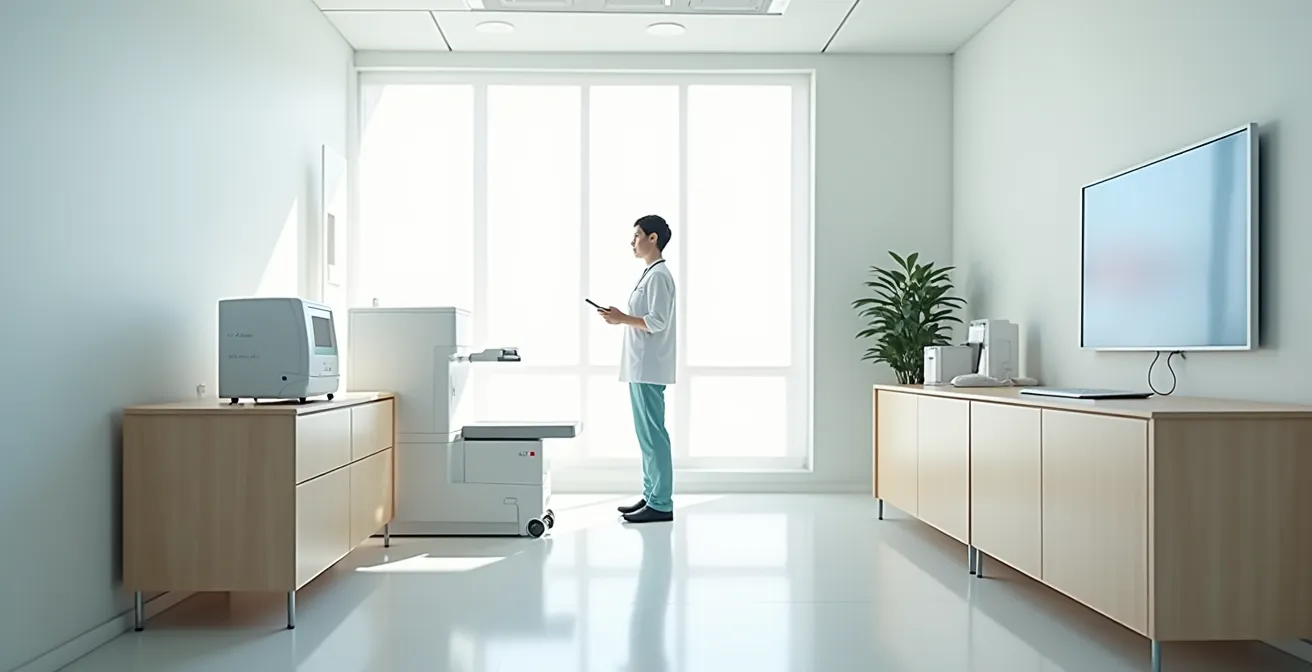
The pre-consultation check is a systematic process of verification. It confirms that the dedicated network resources are allocated correctly and that the quality of the connection meets the stringent requirements for medical-grade communication. It’s about proactively identifying potential issues before the patient and physician are connected, ensuring a seamless and reliable clinical encounter.
Your Pre-Consultation Tech Validation Checklist
- Verify Endpoint Connectivity: Run automated ping tests to all critical network endpoints (e.g., the remote physician’s station, the hospital’s data server) to confirm a basic connection is established.
- Confirm 5G Priority Allocation: If using network slicing, execute a test to verify that the device has successfully authenticated onto its dedicated, high-priority network slice.
- Measure True End-to-End Latency: Run a specialized test that measures the round-trip delay between the patient-side device and the physician’s console. This is the only latency measurement that matters.
- Assess Transmission Quality: Beyond raw numbers, perform a medical assessment of transferred data quality. According to one study, this includes evaluating ultrasound image quality and transmission latency to ensure it meets clinical standards.
- Validate Secure Tunnel Integrity: Run a diagnostic to confirm the VPN tunnel is active and that all cryptographic certificates are valid, ensuring a secure and HIPAA-compliant session.
4G or 5G: Do You Really Need Gigabit Speeds for Social Media Scrolling?
The distinction between the network requirements for casual internet use versus professional telemedicine is vast. For scrolling through social media, watching a video, or browsing the web, a 4G LTE connection is perfectly adequate. If a video buffers for a few seconds, the consequence is minor annoyance. The “best-effort” nature of 4G is well-suited for these non-critical tasks. The question for healthcare providers is whether the leap to 5G is a necessary investment or an expensive upgrade.
On paper, the performance gap is immense. As industry analyses frequently point out, 5G is engineered to deliver speeds up to 100 times faster than 4G, coupled with a dramatic reduction in latency. While this raw speed is impressive, it’s the *consistency* and *capacity* of 5G that make it essential for high-stakes medical applications. Social media is a one-way consumption of data that is tolerant to delays. A remote medical consultation is a two-way, real-time interaction that is not.
A high-definition video consultation between a patient and a specialist requires a stable, high-bandwidth connection in both directions (uplink and downlink) to function effectively. A pixelated, frozen, or dropped video feed can prevent a doctor from observing subtle but critical visual cues, such as a patient’s skin tone, breathing pattern, or the reaction of their pupils. This is where 5G’s architectural superiority becomes clear.
As consulting firm STL Partners notes, the promise of 5G lies in its ability to deliver consistent quality of service where other solutions fall short. This is particularly true for mobile scenarios, like an in-home consultation conducted by a visiting nurse or a paramedic in the field.
5G will enable two way HD virtual consultations to happen at scale when compared to other connectivity solutions through the promise of: Mobility versus in-home connectivity solutions such as Wi-Fi. Higher bandwidth versus existing cellular connectivity bringing the necessary consistent quality of service in the field.
– STL Partners, 10 5G Healthcare use cases
So, while you don’t need gigabit speeds for social media, you absolutely need the guaranteed quality of service and symmetrical bandwidth of an enterprise-grade 5G connection to ensure a clinical consultation is safe and effective. The choice is not about speed for convenience, but reliability for clinical efficacy.
Key Takeaways
- Prioritize guaranteed reliability and end-to-end low latency over advertised peak speeds. Mission-critical performance is about consistency, not just bursts of speed.
- Leverage 5G network slicing to create a private, prioritized “lane” for medical data, ensuring it remains unaffected by public network congestion during emergencies.
- Never use standard, consumer-grade data plans for medical devices. They lack the necessary security, reliability, and management features, posing significant risks to patient safety and data privacy.
How to Set Up a Telemedicine Station for Seniors with Limited Tech Skills?
Implementing effective telemedicine for seniors, especially those with limited technological proficiency, is less about the raw technology and more about thoughtful program design. The goal is to create a system that is so simple and intuitive that it removes technology as a barrier to care. This involves focusing on zero-touch setups, clear communication protocols, and embedding the technology within a trusted support system, such as a visiting nurse or a first responder program.
A successful telemedicine station for a senior doesn’t look like a complex computer desk. It should be a dedicated, pre-configured device—often a tablet—with a single purpose. The device should be locked down so that it only runs the telemedicine application. The user interface should be extremely simple, perhaps with a single large button on the screen that says “Start My Appointment.” All software updates, security patches, and configurations should be handled remotely by the healthcare provider’s IT department, requiring zero technical intervention from the patient.
The most effective programs integrate this technology into a human-led care model. Instead of asking a senior to set up the equipment themselves, the technology is brought to them. This approach is exemplified by innovative EMS telemedicine programs that empower first responders to facilitate telehealth visits directly from a patient’s home, avoiding unnecessary and stressful emergency room trips for non-critical issues.
Case Study: Baptist Ambulance TennCare ET3 Telemedicine Program
In Tennessee, Baptist Ambulance launched a CMS-backed program called the ET3 (Triage, Navigate, Treat, Transport) Model. When a patient calls 911 for a non-threatening issue, paramedics can initiate a telehealth visit on-scene with a physician, using their ruggedized, pre-configured equipment. This allows them to treat many non-urgent patients, including seniors, directly in their homes. The program not only improves patient outcomes and comfort but also has a massive financial impact. The initiative is estimated to save more than $8 million annually in TennCare expenses by reducing avoidable emergency room visits.
This model demonstrates the key to success: the technology is a tool used by a trained professional to deliver care. For seniors, the “setup” is about building a trusted, human-centered service where the technology is an invisible and seamless part of the process, rather than an obstacle to be overcome.
To ensure patient safety and operational success, your next step is to audit your current infrastructure and develop a deployment strategy based on these mission-critical principles. Building a resilient telemedicine program requires a deliberate focus on enterprise-grade reliability, security, and strategic redundancy.
Frequently Asked Questions about How 5G Low Latency Saves Lives in Emergency Telemedicine Scenarios?
Why can’t standard consumer data plans handle emergency medical situations?
Consumer plans operate on a ‘best-effort’ basis, meaning they are the first to be deprioritized during network congestion – precisely when emergencies create peak demand. Medical-grade plans guarantee bandwidth and priority access.
What security vulnerabilities exist with consumer SIMs in medical devices?
Standard SIMs use public, dynamic IP addresses that expose devices to the internet, making them vulnerable to cyberattacks. Enterprise medical SIMs use private, static IPs within secure VPNs, ensuring HIPAA-compliant data protection.
How does fleet management differ between consumer and enterprise solutions?
Consumer plans require individual SIM management with no centralized control. Enterprise IoT platforms enable remote monitoring, instant deactivation of compromised devices, and real-time usage analytics across thousands of devices simultaneously.